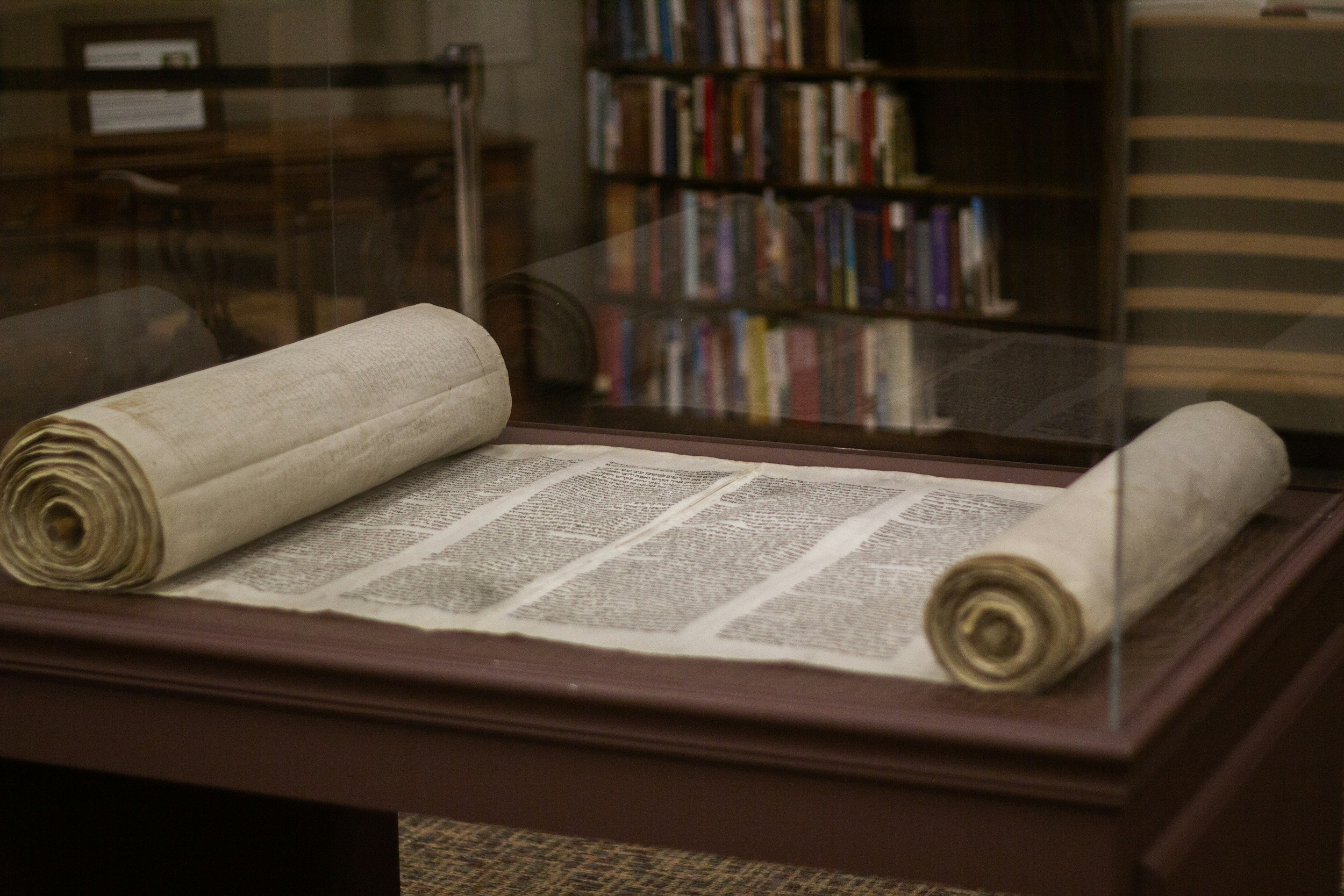
Can We Trust the Bible? Understanding Its Truth
Q: What manuscript and archaeological evidence supports the Bible?
The Bible is one of the best-documented ancient texts in history, supported by a wealth of manuscripts and archaeological discoveries.
Manuscript Evidence
There are over 5,800 Greek manuscripts of the New Testament, along with thousands more in Latin, Coptic, and other ancient languages.
The Dead Sea Scrolls (dated 2nd century BCE to 1st century CE) confirm the accuracy of Old Testament texts, showing remarkable consistency over centuries.
Because of these manuscripts, scholars can compare copies and verify the Bible’s reliability with high confidence.
Archaeological Evidence
Excavations across Israel, Egypt, Mesopotamia, and surrounding regions consistently confirm people, places, and events described in the Bible.
Discoveries such as Hezekiah’s tunnel (2 Kings 20:20), the pool of Siloam (John 9:7), and inscriptions mentioning Pontius Pilate support biblical accounts.
Ancient cities like Jericho, Nineveh, and Babylon, along with cultural artifacts, align with the historical context of Scripture.
In short
Thousands of manuscripts and numerous archaeological findings confirm that the Bible we read today faithfully reflects the texts preserved over millennia.
Q: Has the Bible been altered?
The Bible has been remarkably preserved over thousands of years, and the evidence shows that its message remains intact. Its interconnected structure—like a web of hyperlinks—binds prophecies, teachings, and events together.
If significant parts had been removed or altered, that interconnected design would be disrupted and easily detected. For example:
Prophecies and Fulfillment: Hundreds of Old Testament prophecies point to Jesus’ life, death, and resurrection (Isaiah 53; Luke 24:44). Altering even one breaks the chain of fulfillment.
Thematic Unity: Themes such as covenant, sacrifice, mercy, and God’s faithfulness recur throughout Scripture. Significant alterations would create obvious inconsistencies.
Manuscript Evidence: Thousands of manuscripts—including the Dead Sea Scrolls and early New Testament copies—demonstrate consistency over centuries. Minor copyist differences do not affect the core message.
Despite persecution, attempts to destroy it, and translation across languages, the Bible has been preserved. Its intricate structure makes deliberate alteration virtually impossible without detection.
Q: What about the “removed” books of the Bible?
A common claim is that certain books were “removed” from the Bible. Historically, this is not accurate.
The 66 books of the Bible were not chosen arbitrarily, nor were books later removed to hide truth. From the earliest centuries, God’s people recognized which writings were inspired and which were not. The process was one of recognition, not invention.
The books often labeled as “removed” usually refer to the Apocrypha or other ancient religious writings. These books were never part of the Hebrew Bible and were not accepted as Scripture by the Jewish people—the original custodians of the Old Testament.
Jesus affirmed the Hebrew Scriptures as the Word of God and referenced “the Law of Moses, the Prophets, and the Psalms” (Luke 24:44)—the threefold division of the Hebrew Bible. He and the apostles quote the Old Testament extensively, yet never quote the Apocrypha as Scripture.
Why They Were Not Included
1. They lack prophetic or apostolic authorship
Scripture is written by God-appointed prophets and apostles.
“Holy men of God spoke as they were moved by the Holy Spirit.” (2 Peter 1:21)
The Apocryphal writings cannot be traced to recognized prophets or apostles.
2. They contain doctrinal contradictions
God does not contradict Himself.
“God is not the author of confusion.” (1 Corinthians 14:33)
Some Apocryphal texts promote ideas such as prayers for the dead and salvation by works, which conflict with:
Salvation by grace (Ephesians 2:8–9)
One sacrifice of Christ for sin (Hebrews 10:10–14)
3. They do not claim divine inspiration
Canonical books speak with authority:
“All Scripture is given by inspiration of God.” (2 Timothy 3:16)
Apocryphal books do not make this claim in the same way.
4. They contain historical inaccuracies
True Scripture is reliable in what it affirms.
“Your word is truth.” (John 17:17)
Several Apocryphal writings conflict with established biblical timelines and historical facts.
How Early Believers Viewed Them
The Jewish community never recognized the Apocrypha as Scripture. Early Christian leaders distinguished between inspired Scripture and useful historical writings. Jerome, translator of the Latin Vulgate, stated these books were for reading, not for establishing doctrine.
Why This Matters
God preserves His Word with intention. Books that lack divine authority or contradict established doctrine do not belong in Scripture. Rather than being “removed,” these writings were simply never part of the God-breathed canon.
In short
The so-called “removed books” were never recognized as inspired Scripture by God’s people. The Bible we have today contains the books that meet God’s standard of inspiration, prophetic authority, and doctrinal harmony.
Q: Does the Old Testament describe Jesus?
Yes. It predicts a divine Person—eternal, worshiped, saving, judging, and ultimately resurrected. Only Jesus fits these details.
Q: Are the prophecies specific?
Birthplace (Micah 5:2)
Crucifixion foretold (Psalm 22)
Resurrection described (Psalm 16:10)
Betrayal for 30 silver coins (Zechariah 11:12–13)
Detailed suffering (Isaiah 53)
Q: Does the Old Testament reveal more than one divine Person?
Yes. The Old Testament shows more than one divine Person interacting within the Godhead. Long before Jesus came in the flesh, the pre-incarnate Christ appears alongside the Father.
Where We See This
The Angel of the Lord speaks as God and is worshiped (Exodus 3).
The Lord on earth interacts with the Lord in heaven (Genesis 18–19).
The Word of the Lord appears and speaks as a Person (1 Samuel 3).
These are early glimpses of the One the New Testament reveals as Jesus.
Why This Matters
God has never been solitary. Relationship, unity, and love have always existed within the Godhead. The Father, Son, and Spirit were present from the beginning.
Q: How is the Bible interconnected?
The Bible consists of many books, written by many people across 1,500 years—yet it tells one unified story.
Examples:
Genesis ↔ Revelation — creation and new creation
Exodus ↔ John — Passover lamb and the Lamb of God
Isaiah ↔ Gospels — prophecies fulfilled in Christ
Psalms ↔ Crucifixion — detailed descriptions of suffering
These connections reveal an overarching design. The Bible “speaks to itself,” showing one Author behind all its pages.
In short
The Bible’s unity and prophetic harmony reflect divine inspiration.
Q: Does God protect His Word?
Revelation 22:18–19: “I warn everyone who hears the words of the prophecy of this book: if anyone adds to them, God will add to him the plagues described in this book, and if anyone takes away from the words of the book of this prophecy, God will take away his share in the tree of life and in the holy city, which are described in this book.”
Revelation 22:18–19 warns against adding to or removing from Scripture.
God’s warning shows His desire to protect His truth and His people. He ensures that seekers can find hope and salvation through an unaltered message.
Every part of Scripture teaches, guides, and points to Jesus—reinforcing the seriousness of preserving its words.
Q: What does Jesus say about Scripture?
Jesus affirmed the absolute authority, permanence, and truthfulness of Scripture. He treated the Old Testament as the very Word of God—not as legend, myth, or symbolic tradition.
Jesus said:
“Scripture cannot be broken.” (John 10:35)
“Heaven and earth will pass away, but My words will not pass away.” (Matthew 24:35)
When tempted by Satan, Jesus did not argue philosophically—He quoted Scripture:
“It is written…” (Matthew 4)
Jesus consistently appealed to Scripture as the final authority in matters of truth, morality, prophecy, and salvation. If Scripture were unreliable, incomplete, or corrupted, Jesus’ confidence in it would be misplaced. Yet He trusted it fully.
He also confirmed:
The historical reality of Adam and Eve (Matthew 19:4)
The flood in Noah’s day (Matthew 24:37–39)
Jonah in the great fish (Matthew 12:40)
Abraham, Moses, and the prophets (Luke 16:29–31)
Jesus affirmed both the spiritual and historical accuracy of Scripture.
Why This Matters:
If Jesus is who He claimed to be—the Son of God—then His view of Scripture settles the question.
He did not present Scripture as partially inspired.
He did not suggest it would be lost or corrupted.
He upheld it as God-breathed truth that would endure.
In short
Jesus trusted Scripture completely, quoted it as final authority, and promised His words would never pass away. A Christian’s confidence in the Bible ultimately rests on Christ Himself.
Why Certain Bible Versions Matter
Every word in Scripture matters. The translation we choose shapes how clearly we receive that truth. Older translations such as the KJV and NKJV preserve certain verses that many modern translations move to footnotes or omit—particularly verses concerning prayer, fasting, repentance, and spiritual authority.
This isn’t about doubting God’s preservation; it is about choosing translations that honor that preservation without dilution.
Examples of verses often missing or footnoted
Matthew 17:21 — prayer and fasting in deliverance
Matthew 18:11 — Jesus’ mission to save the lost
Mark 9:44 & Mark 9:46 — warnings about sin and judgment
Mark 11:26 — forgiveness as a condition of prayer
Luke 23:17 — Passover custom
John 5:4 — the angel troubling the waters at Bethesda
Acts 8:37 — confession of faith before baptism
Acts 9:5–6 — Christ’s words to Saul
Acts 15:34 — appointment in Antioch
Acts 24:6–8 — accusations against Paul
Acts 28:29 — Jewish response to Paul’s preaching
Romans 16:24 — blessing of grace
1 John 5:7 — the heavenly witnesses (a foundational text on the Trinity)
These verses are not minor; many of them address:
Jesus’ authority
spiritual warfare
repentance
confession
fasting
judgment
the Trinity
For Christians who value the complete counsel of Scripture, this matters spiritually. Verses tied to deliverance, fasting, and authority equip believers to:
resist temptation
stand against darkness
deepen prayer
pursue holiness
walk in obedience
break strongholds
When such verses are moved to footnotes or omitted, emphasis can be reduced on practices central to spiritual growth and warfare.
Therefore, many believers prefer translations like the KJV or NKJV—not to create division, but to preserve the full strength and clarity of Scripture.
Conclusion
We all want Scripture that is whole and trustworthy. Prioritizing translations that keep crucial teachings clear and uncompromised is wise—not out of loyalty to a version, but out of love for God’s Word.
Ultimately, the best Bible is the one you are going to read.
Yet when in doubt—or when studying deeper matters of doctrine—it is wise to use the KJV or NKJV as a reference guide, because they retain key verses that emphasize fasting, deliverance, authority, and the full strength of Scripture.